Memorable wines of 2025: Part two
Spanish Wine Collective writers reflect on a memorable bottle they uncorked in 2025.
In part two, Bill Bolloten recalls an exceptional unfortified fino from Bodegas Luis Pérez.
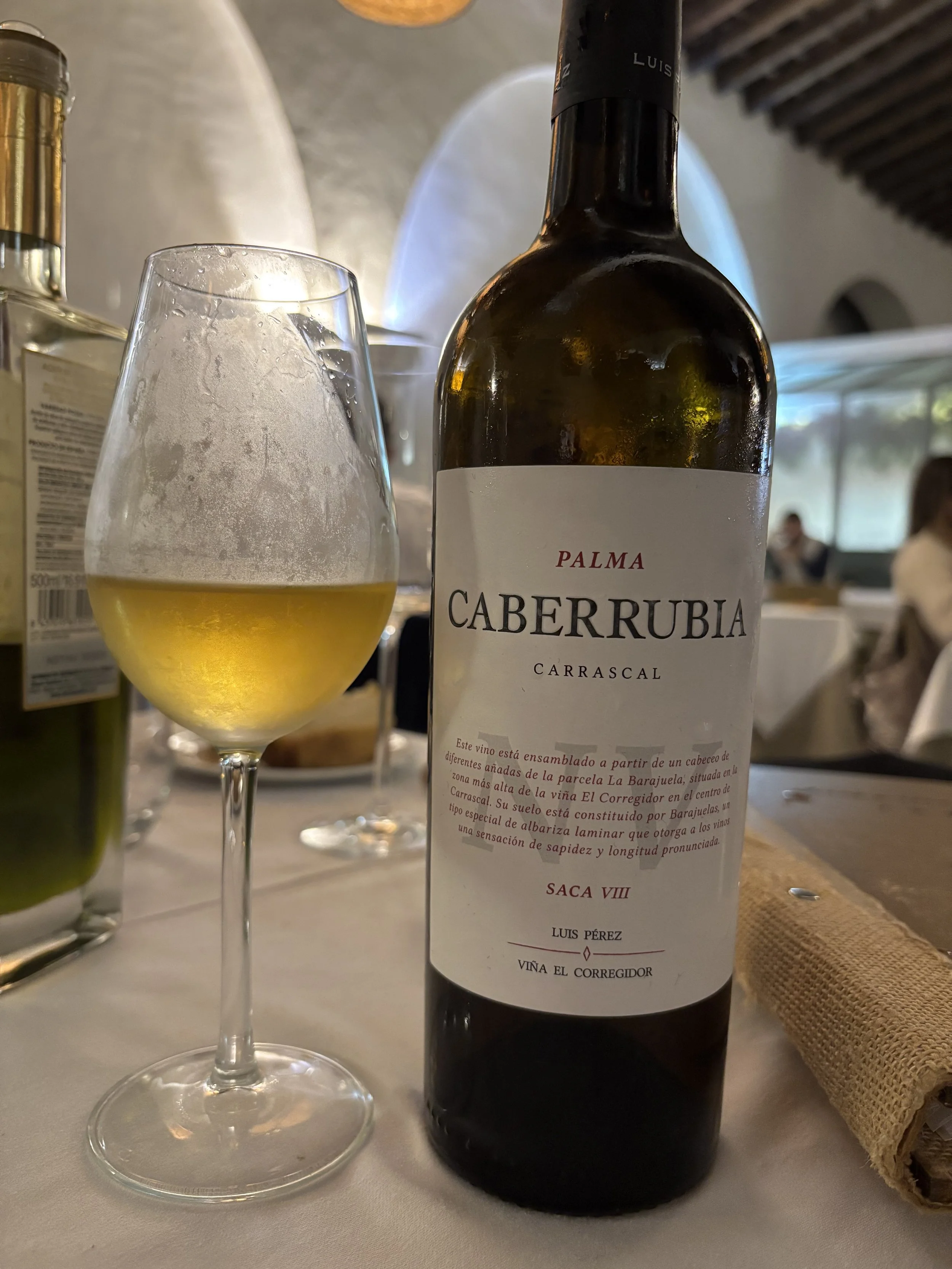
Caberrubia Carrascal Saca VIII, Bodegas Luis Pérez
No DO
Variety: Palomino
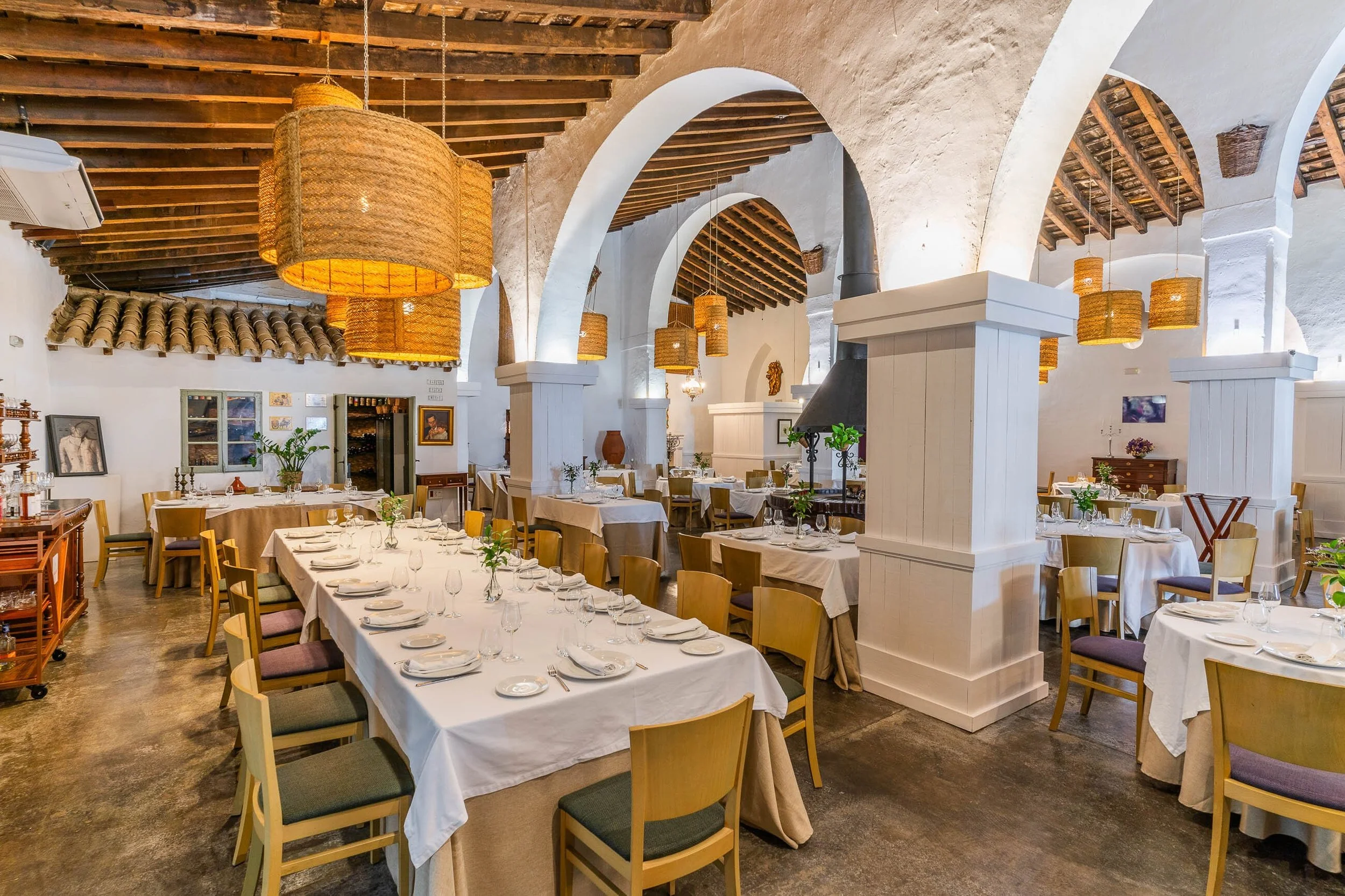
I first tasted Caberrubia fino during a visit to Jerez at the beginning of 2025, where it accompanied a birthday meal at La Carboná, a restaurant housed in an old sherry bodega in the heart of the town.
Caberrubia is inspired by a lost tradition: the selección de añadas, a type of fino common in the 18th and 19th centuries, that was made without fortification and aged statically rather than in the solera and criaderas system.
In reviving this approach, Luis and his son Willy Pérez are not indulging in nostalgia but pointing towards where sherry wines may be heading today and in the years to come.
The wine is made from 100% Palomino Fino grown on 40–50-year-old vines in the Carrascal pago, characterised by its hard, laminated albariza de barajuelas soils. The fruit is harvested in multiple passes from late August to early September, with only the finest bunches selected and briefly sun-dried for six to seven hours. Fermentation takes place naturally in old botas, followed by three to four years of biological ageing under carefully controlled flor, without fortification or solera, allowing the vineyard’s character to speak with clarity and precision.
The final wine is a blend from different vintages, designed to express place over time rather than a single year. With our meal we enjoyed a fino that was intense, deep and savoury, with ripe citrus underscored by a saline, chalky texture. The flor influence was present, but didn’t dominate the overall balance.
It’s also a memorable wine for its name, which signals hope and renewal. “Caberrubia” is the local name for a small migratory bird from Africa, the alzacola (reddish warbler in English), that has returned to nest in the Pérez family’s vineyards since their conversion to organic viticulture. Choosing this wine means contributing, in a small but meaningful way, to a healthier landscape, and that’s something worth feeling good about.